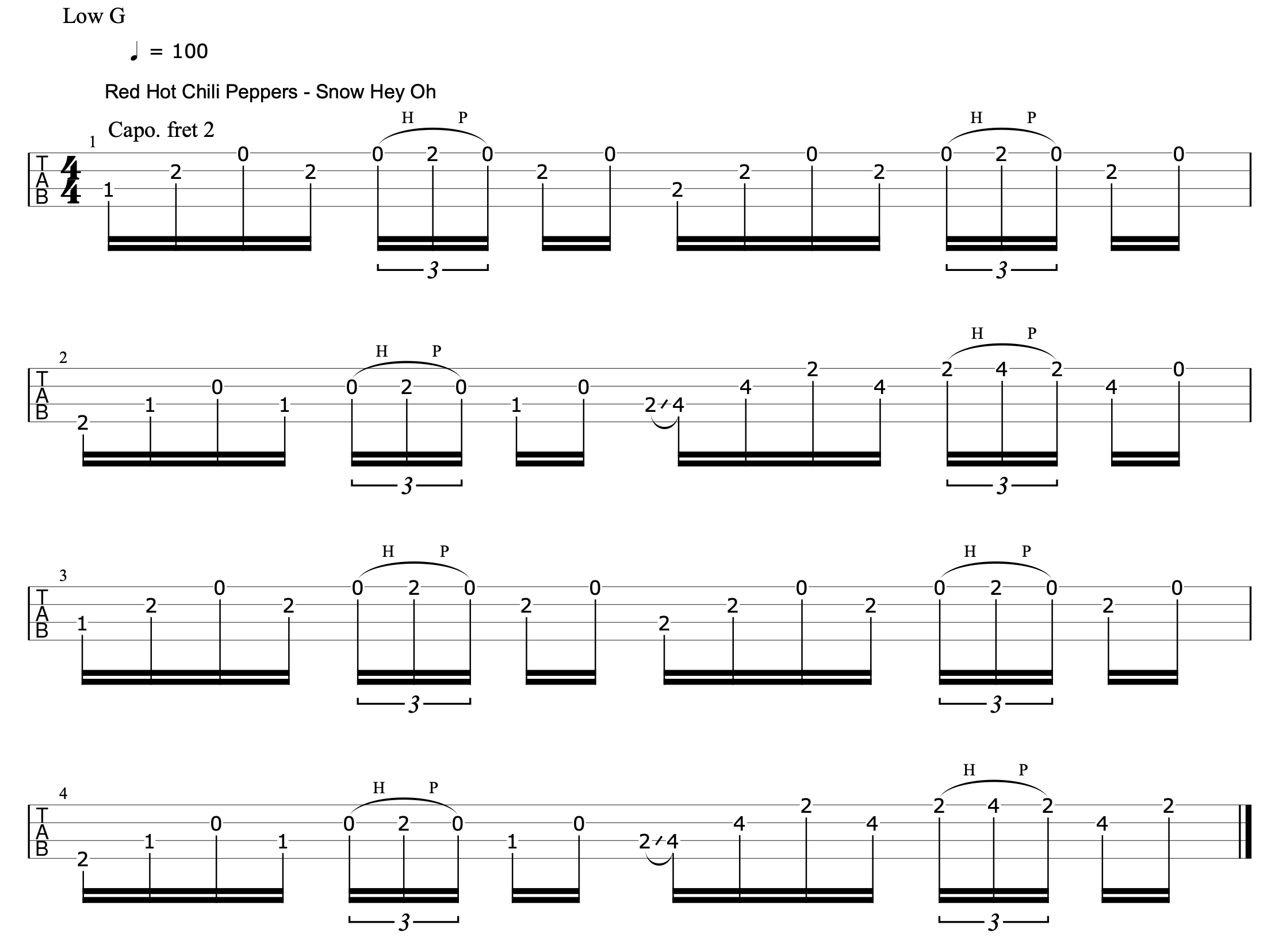
Red Hot Chili Peppers – Snow (Hey Oh) (Low G)
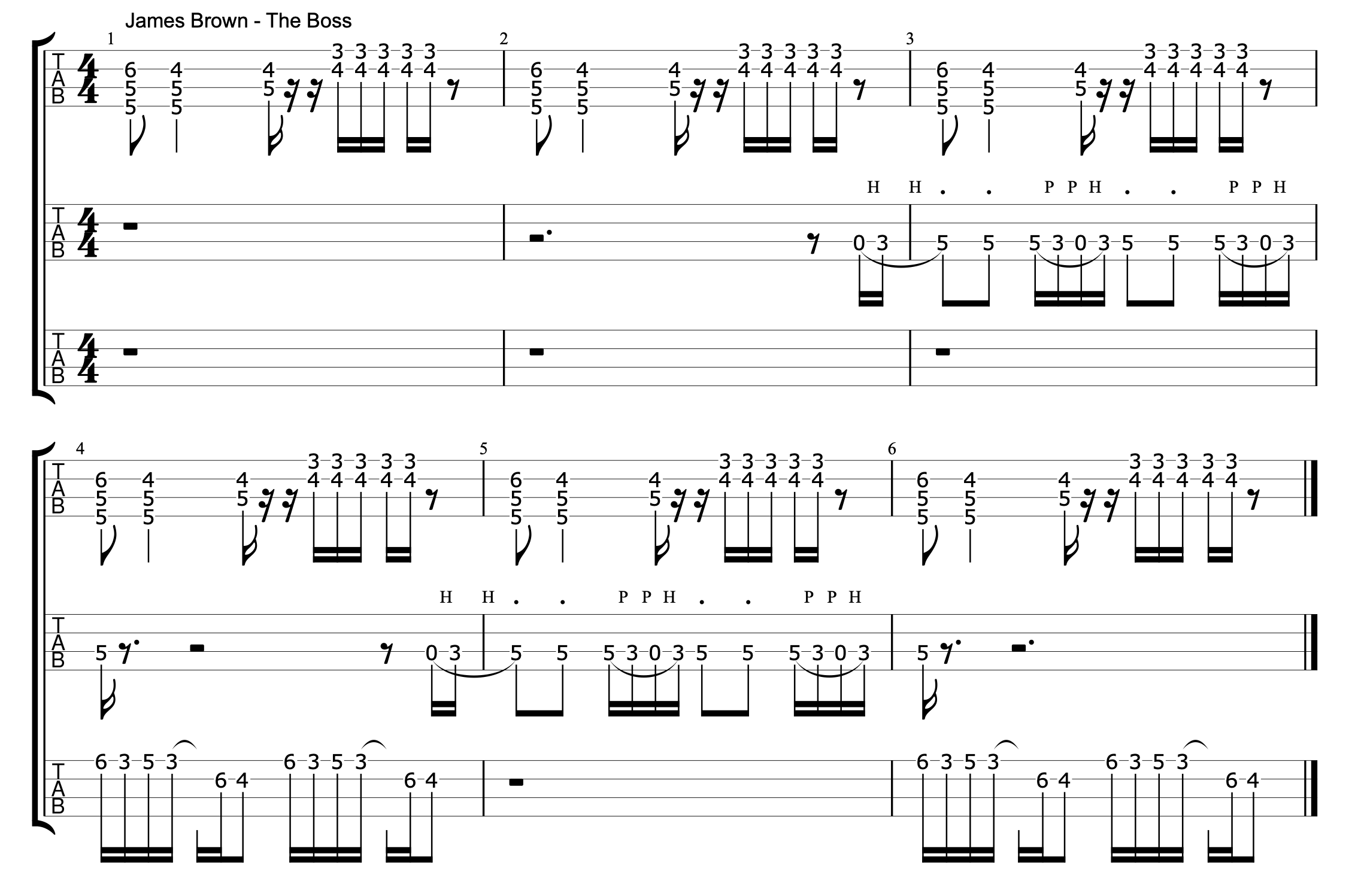
James Brown – The Boss
Geese – Au Pays du Cocaine

Alice DJ – Better Off Alone

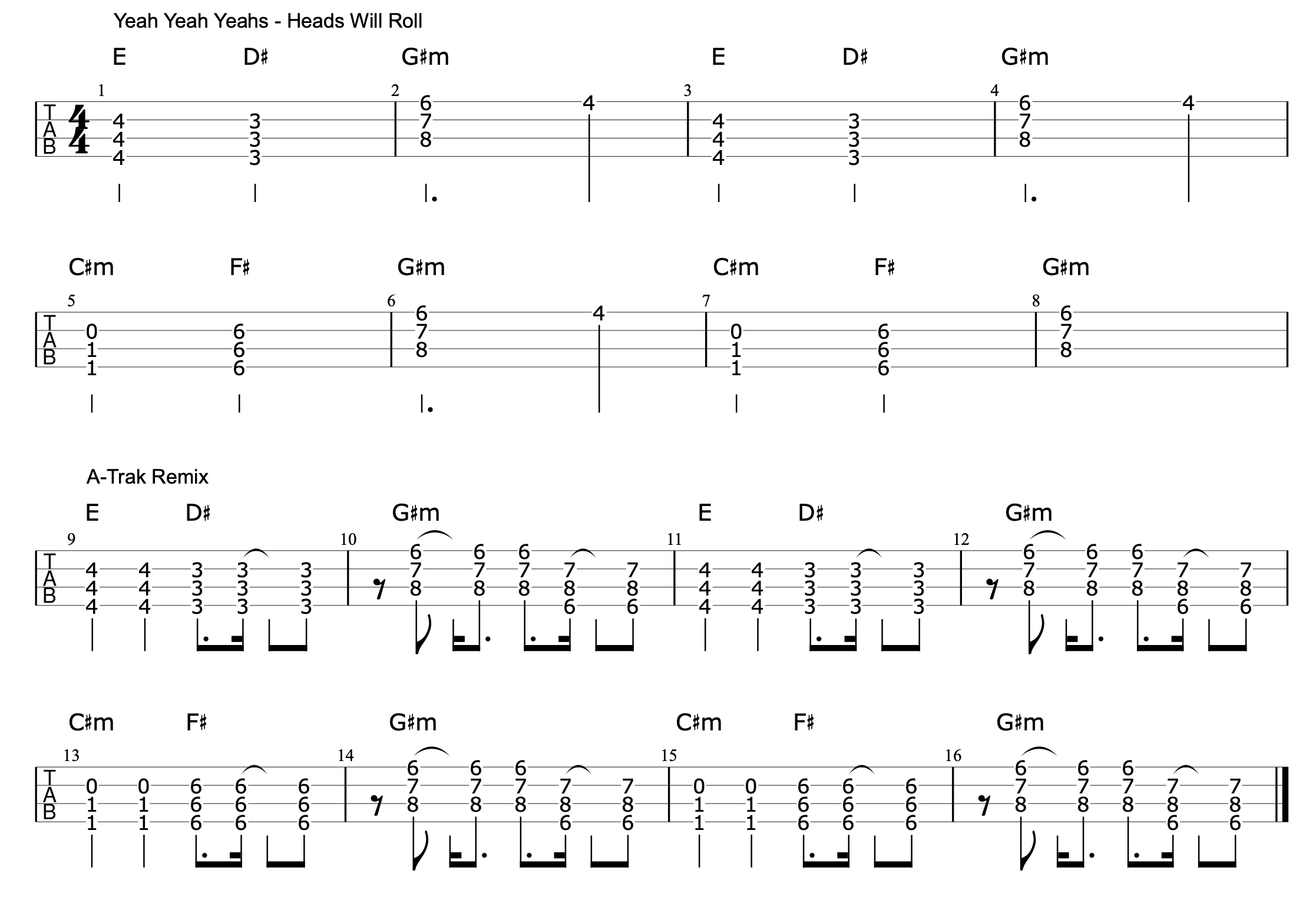
Yeah Yeah Yeahs – Heads Will Roll
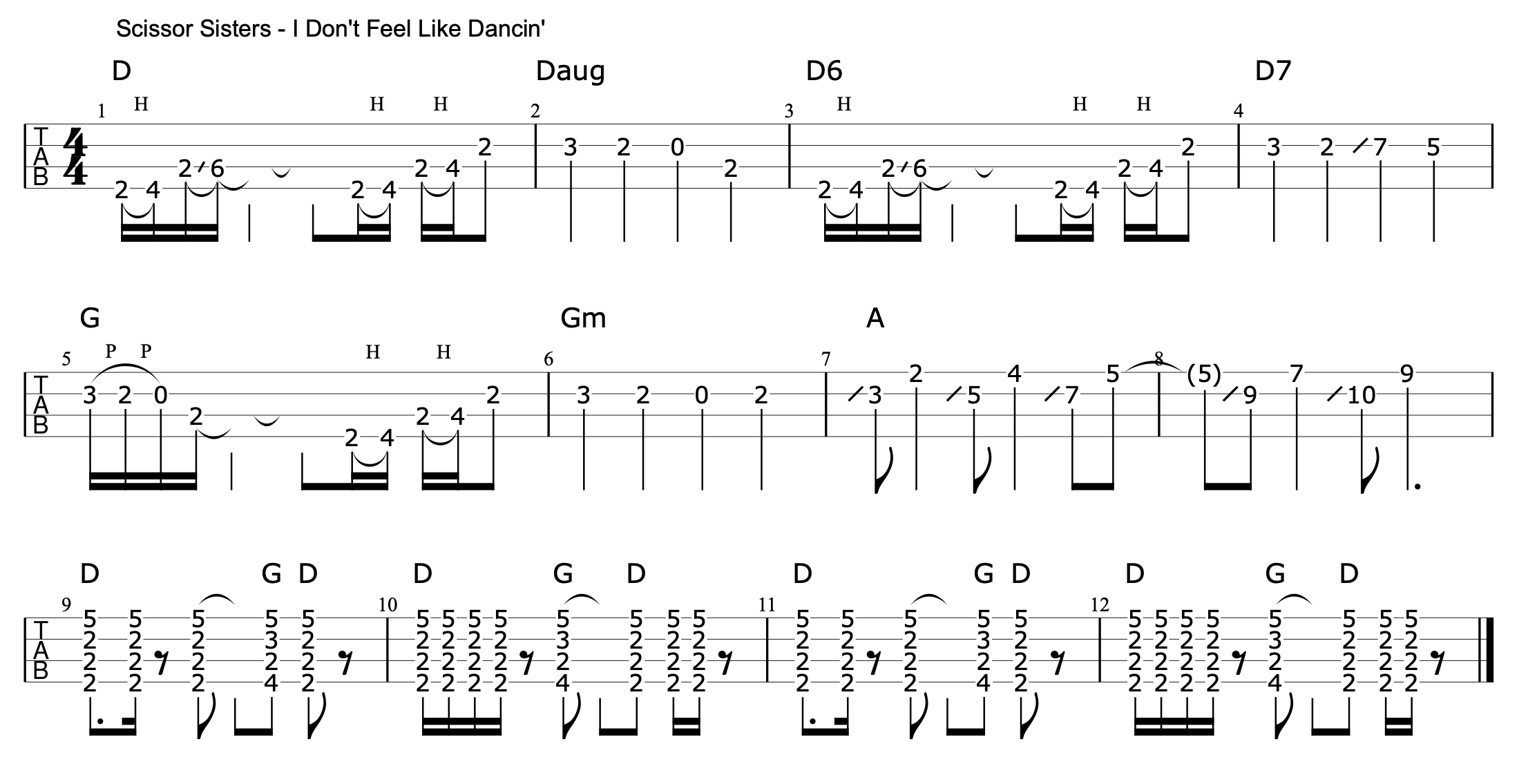
Scissor Sisters – I Don’t Feel Like Dancin’ (Low G)
Coldplay’s Trouble is a nice, simple one. Even the solo is just a fancy version of the chords.
Buy the original
More 2000s tabs and chords
Uke Hunt Patreon
Pearl Jam’s Yellow Ledbetter. startuh out on the B-sahhh but thuh words don’t quite line up now, an’ the song jus’ sorta rolls, on a wizard on a whale, an’ nowah suddenly it’s a fan faverrrrah. Ohahnahha.
This one took a fair bit of knocking around to fit onto uke. There are only three chords in it (C, G and F) but there are many jumps up and down the neck and some stretches to deal with. The intro in particular is fiddly but a lot of fun to play.
Intro/Outro: A Little Wing/Lenny-style intro with plenty of flying up and down the neck. Make sure you include plenty of silences and changes in dynamics to keep things interesting.
Verse: Nothing difficult to play here. Just a few slides and many pull-offs.
Chorus: A little increase in difficulty with a stretch up to the 6th fret in bar 26.
Solo: Some tricky stuff here too. I’ve included elements from the original. But you can adapt it however you feel. I’d recommend sticking fairly close to the C major pentatonic scale. But you can include some C minor pentatonic for a more bluesy feel.
Bridge: This section is very sparse. But it demonstrates how effective just changing the order of the chords can be. It still uses the C, G and F chords but this section has a very different feel.
Buy the Pearl Jam version
More 90s tabs and chords
Uke Hunt Patreon
Bon Jovi’s Livin’ on a Prayer is full of hair-rock bravado, so I wasn’t sure if it’d work on uke. But it has a very strong melody, so I was pleasantly surprised by how much I enjoyed playing it.
Intro: I had to change the talk-box riff a fair amount to get it onto uke. This version runs more smoothly than the original. And it doesn’t go on for 45 seconds.
Verse: The verses don’t have anything too challenging. It’s all Am – F – G in open position.
Pre-Chorus: Things build in intensity here but don’t get any more difficult.
The second pre-chorus is cut short. As well as reducing the number of bars, they also cut a beat out of bar 44 (making it a bar of 3/4). This combined with the lack of any preparation in the chords, means the key change really hits you in the face.
Chorus: The first chorus is challenging enough. But changing to C minor for the second chorus makes it even trickier. I originally arranged it to replay the chorus in the original key. And I think that’s a perfectly reasonable way to play it if you want to avoid the added difficulty. Even Jon Bon Jovi seems in two minds about it. But it’s such a moment in the song I decided it’s worth tackling.
Solo: The solo has a few tricky moves too. But, once everything is octave shifted, it plays nicely on the uke. The one thing worth skipping would be the very fast lick in bar 40. It’s very difficult to play (I certainly didn’t get it cleanly in the video) and I think something simpler could be just as effective.
Tracklist
Mon Rovîa – Heavy Foot
Opihi Pickers – Sí Se Puede
Kris Fuchigami – Dueling Banjos
Alex Fam & Brother Gareth – Eyes of the Earth
Tyrone & Lesley & The Nukes – Forgot You Knew
Drew Martin – Only Shapes
Ukulele Bartt Warburton – Mozart for Ukulele
UKULELEYOX – Just As the Tide Was A-Flowing
Changsoo Kim – Etudes for Left hand 'Romantica' & Casa de Cordoba'
A massive thanks once again to the generosity of Uke Hunt’s Patreon backers for keeping the site up and running this month.
And extra thanks to January’s Tenor level backers:
– Arthur Foley
– Brian
– Dennis Boutsikaris
– Elizabeth Beardsley
– Ely Fletcher
– Ivo
– Jeff K
– Jon Kenniston
– Kelby Green
– Leia-lee Doran
– Margit Stadlmann
– Mary
– Noah
– Pat Weikle
– Pauline LeBlanc
– Rick Wurster
– Robert
– Steven Pituch
If you join Patreon at the Concert level or higher, you’ll get access to all 72 previous exclusive tabs including January’s: Tonight You Belong to Me covered by Steve Martin, Eddie Vedder and many others.
Mele Kalikimaka, Merry Christmas, Chanukah Sameach, Feliz Natal and Happy Holidays! (If that’s what you’re into.)
That’s it from me for another year. I’ll be back at the end of January 2026.
If you can’t stand to be without a steady stream of uke, I’ll be posting on Instagram, BlueSky and Patreon. Speaking of which…
I’m overwhelmingly grateful to all the people supporting the site on the Uke Hunt Patreon. Without your generosity Uke Hunt would not still be going. And without your suggestions for tabs I’d probably be covering Belgian art rock songs rather than tunes people want to learn. Your munificent patronage of the arts has not been since Renaissance Italy.
And extra thanks to December’s Tenor level backers:
– Arthur Foley
– Brian
– Dennis Boutsikaris
– Elizabeth Beardsley
– Ely Fletcher
– Ivo
– Jeff K
– Jon Kenniston
– Kelby Green
– Leia-lee Doran
– Margit Stadlmann
– Mary
– Noah
– Pat Weikle
– Pauline LeBlanc
– Rick Wurster
– Robert
– Steven Pituch
If you join Patreon at the Concert level or higher, you’ll get access to all previous exclusive tabs including December’s: Marvin Gaye/CCR’s I Heard it Through the Grapevine.
Playlist
Rachael Dadd – Tap the Sap
Ska Tune Network – Giant Woman
Takemoto Neko – On a Little Bamboo Bridge
RIO – Overjoyed
Jan Laurenz – 3 Short Irish Pieces
Jonsukulele -Sally MacLennane
Korea Ukulele Education Association – Bachianas Brasileiras No 5 (Villa-Lobos)
4stringboy – paws
Nova Black – When I Die
Herman Vandecauter – Ouverture Filippo Sauli
Here’s the ultimate 90s one hit wonder: Sixpence None the Richer’s Kiss Me.
Intro: A simple start. Just strumming out a G chord with the note on the E-string moving down and back up chromatically.
Verse: That chord progression continues into the verse. The melody here is very contained. It’s almost all going between the open g-string and open A-string until bar 12 , which builds into the chorus.
Chorus: The chords get busy in the chorus. I found it a bit of a challenge to memorise all the changes. But once it’s under your fingers, it’s not hard to play.
Solo: The first half of the solo is very relaxed. But there’s a lot more to do in the second half. This arrangement is only loosely based on the original. So feel free to change it however you like.
Al Green’s Let’s Stay Together is a buttery-smooth track, a laid-back feel, and has an earworm melody and tasty chords. All of which mean it suits the ukulele well.
Intro: The intro nicely sets up the harmony for the piece. And prepares you for plenty of movement up and down the neck. Keep the notes (except the C-string bass notes) staccato to mimic the horns.
Verse: The first verse has a more minimal arrangement. The second and third verses are heavier and have a bit of filigree. You can mix and match these elements as you like. Or include some of your own ideas.
Pre-Chorus: A tasty Am9 in this section. Which is fretted like an Em chord but with the g-string played at the second fret.
Chorus: A lot of moving up and down here. But if you plan ahead, you can use the passing notes to get into position for the next chord. For example, if you play the A-string, 3rd fret in bar 40 with your pinkie, you’ll be set up for the Dm7 chord in bar 41.
Solo: The string solo is the hardest part of the song. I’ve kept this arrangement as close to the original as possible. But I think there’s room for a more uke-friendly version if you want to try. Or, I don’t think anyone would notice if you just skipped this section.


Receive the latest Uke Hunt posts in your inbox.