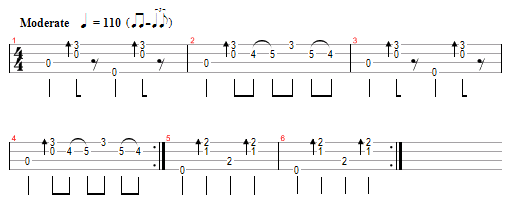
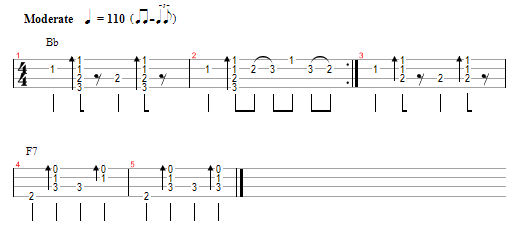
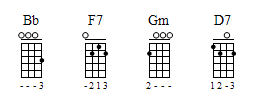
Sara Watkins has a few ukulele songs knocking around but this one – from Nickel Creek’s Why Should the Fire Die? – is the standout. The tuning she uses in this one is rather unusual. It’s like a low-G ukulele tuned down two frets (to F Bb D G). I worked out the tune using a baritone ukulele with a capo at the third fret.
You may have noticed this is my seventh post in the space of six hours. It’s all part of the overhaul of the site that will be taking place soon.
With over 1,000 blog posts on Uke Hunt and a bunch more in the other sections, it’s getting impossible for people to find what they’re looking for. So these posts are designed to guide people towards the stuff that they’ll find most useful.
The first set of ‘lessons’ are divided by difficulty with a couple more focusing on styles (fingerpicking – which needs a bit of filling – and blues).
If you’ve got a suggestion for a section or something that should be included in a section, let me know in the comments.
For Beginners
Learn:
– How to read chord charts.
– Songs using only basic chords.
– Strumming technique.
– Essential equipment.
Theme tunes to films, games and TV shows provide a great test for your tab playing abilities and give your something instantly recognisable to play for friends and family.
Tabs for tunes that combine melody and chords but can all be played with just your thumb on the picking hand. So you can concentrate on the fretting hand without having to worry about complicated picking.
Once you’ve reaching this stage in your ukulele playing, you’ll have put in many hours of practice. Before you get much further it’s time to get yourself a really nice, solid-top ukulele. Ohana and Kala both have solid ukuleles at affordable prices. If you budget stretches a bit further, take a look at KoAloha and Pono.
Now head to the advanced section and prepare to blow people’s mind with your mad-skills.
If you think there’s a post that deserves a link here or have a topic you’d like me to cover in this section, leave a comment.
Following on from the beginner lessons, you’re rocking through the easy chords, have your strumming down and learnt some fundamentals. In this section we’ll kick it up a notch with some more advanced chords.
To get this far you’ve shown some dedication. If, like me, you started on a really crappy ukulele, you’ve earned yourself a nice uke. Kala make some nice ukuleles and Lanikai both make good ukuleles at reasonable prices.
You’ve just got your hands on a ukulele (or are just thinking of buying one). Here are a few things to read and songs to play that’ll get you up to speed quickly.
Extra Credit: Ukulele for Dummies – The (paper) book I wrote covering all the ukulele basics from buying your first uke, to strumming, chord shapes and far beyond.
Extra Credit: Joan Jett – Bad Reputation – Easy chords but you’ll need to have your chord changes down and a strong strumming-hand to play it up to speed.
Since his arrangement of In the Mood, I’ve been looking forward to seeing what David would come up with next and I wasn’t disappointed. His version of Mississippi Blues has plenty of bluesy licks. And he was kind enough to let me share the arrangement here.
As far as I’m concerned, the UOGB’s performance at the Proms is the high-water mark of the ukulele revival (so far).
If you’re not familiar with the Proms, they’re a series of straight classical music concerts that have been held at the Royal Albert Hall for the last 115 years and culminate in a display of chinlessness and nostalgic faux-nationalism at the Last Night of the Proms. They’re about as establishment as you can get. So having the Ukulele Orchestra of Great Britain play at the Proms is similar to the Queen breaking out an Abbott Monarch for a rendition of Five Foot Two.
If you hadn’t guessed from the last paragraph, I’m not much of a fan of the Proms. They represent a staid, backward-looking, elitist side of Britain. Which begs two questions: Who the hell put the Ukulele Orchestra of Great Britain on the bill? And why was I so pleased they were part of it?
Part of why I enjoyed it is that the music feels slightly homemade. The Ukes are good musicians but they’re certainly not virtuosi. George quotes of one fan’s response to his fears of not getting all the notes right, “We don’t come to your concert to see you get the notes right.” No matter how big they get, there’s still a sense that they’re one of us. Playing inappropriate tunes on the ukulele just for the fun of it.
And that idea reaches its natural conclusion with 1,000 audience members playing along with Ode to Joy. Anyone watching that hoping to hear the right notes is going to come away disappointed. But the sight of 1,000 people cheering and waving out-of-tune ukuleles feels like a vindication of everyone who has picked up an instrument (or a paintbrush, or knitting needle or a saw) and decided that making their own entertainment was more important than switching on the telly to watch someone competent.
Is should probably talk about the DVD itself. If you want a proper write-up, I highly recommend you read Acilius’s review. He asked a question: “Is it really worth paying £15.00 plus postage?” His answer was an emphatic yes. Mine is a bit more circumspect. It’s a must buy for anyone who, like me, wants to own a bit of ukulele history and UOGB completists. But people who just want a flavour of the Ukes would be better off with Live in London #1 and #2.
Buy Ukulele Orchestra of Great Britain Prom Night on their website.